Backed byCombinator

Your local AI workstation.

Hardware and software designed together
to run large open models fast.

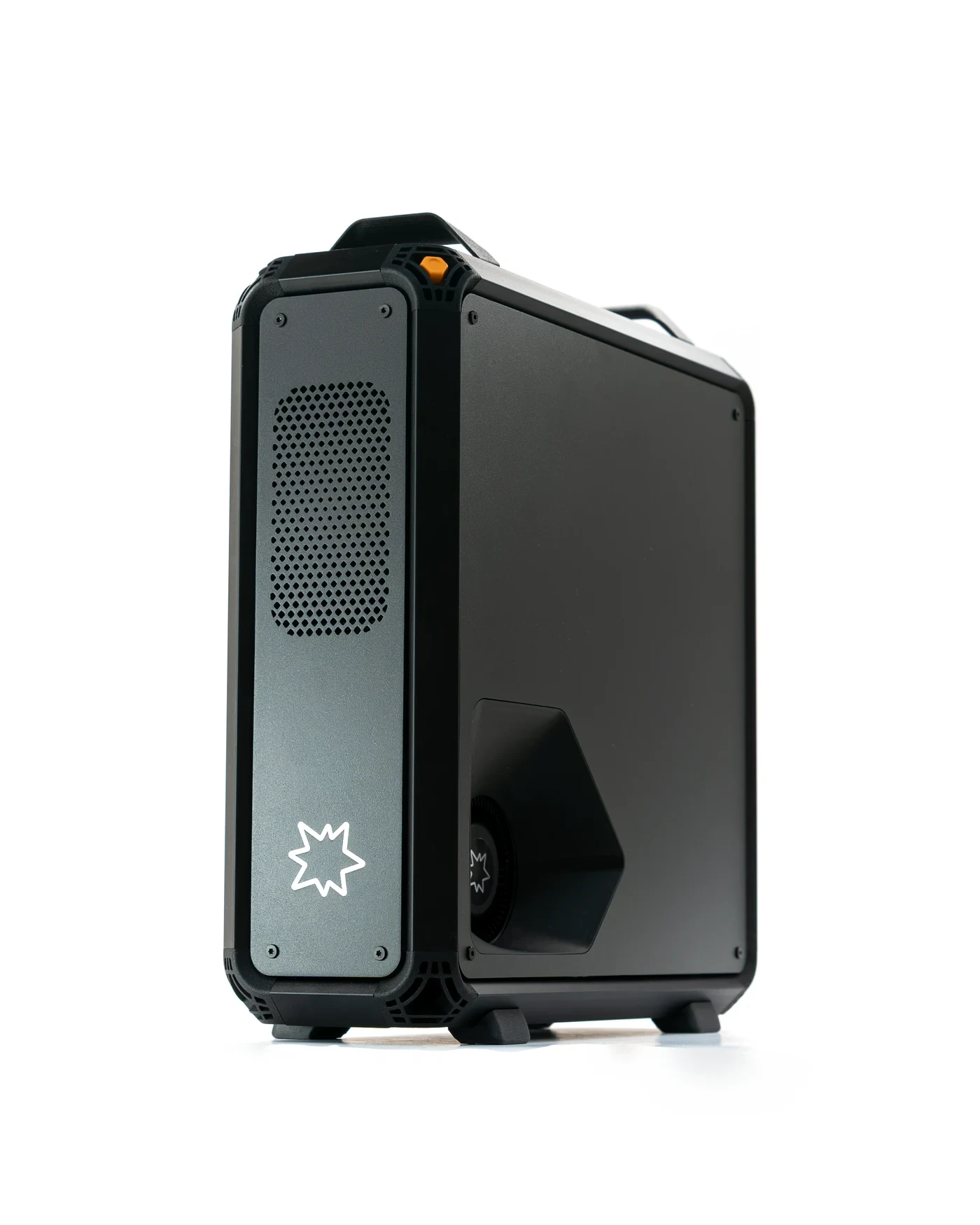
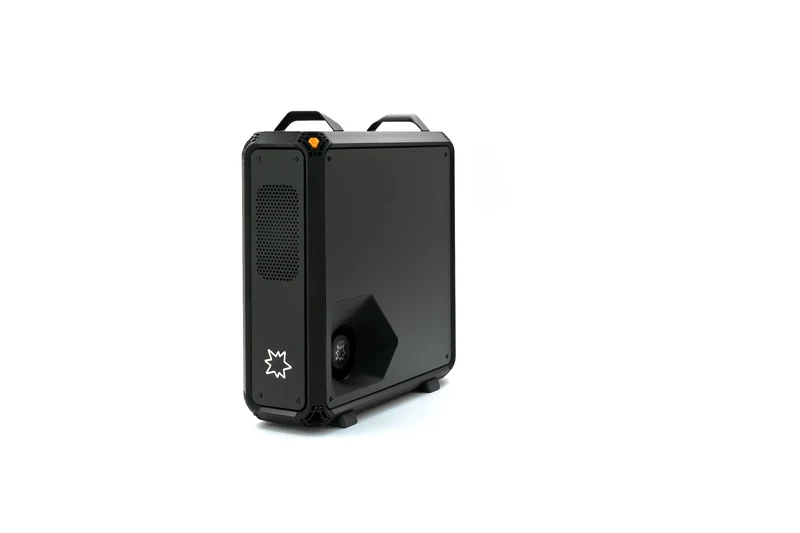
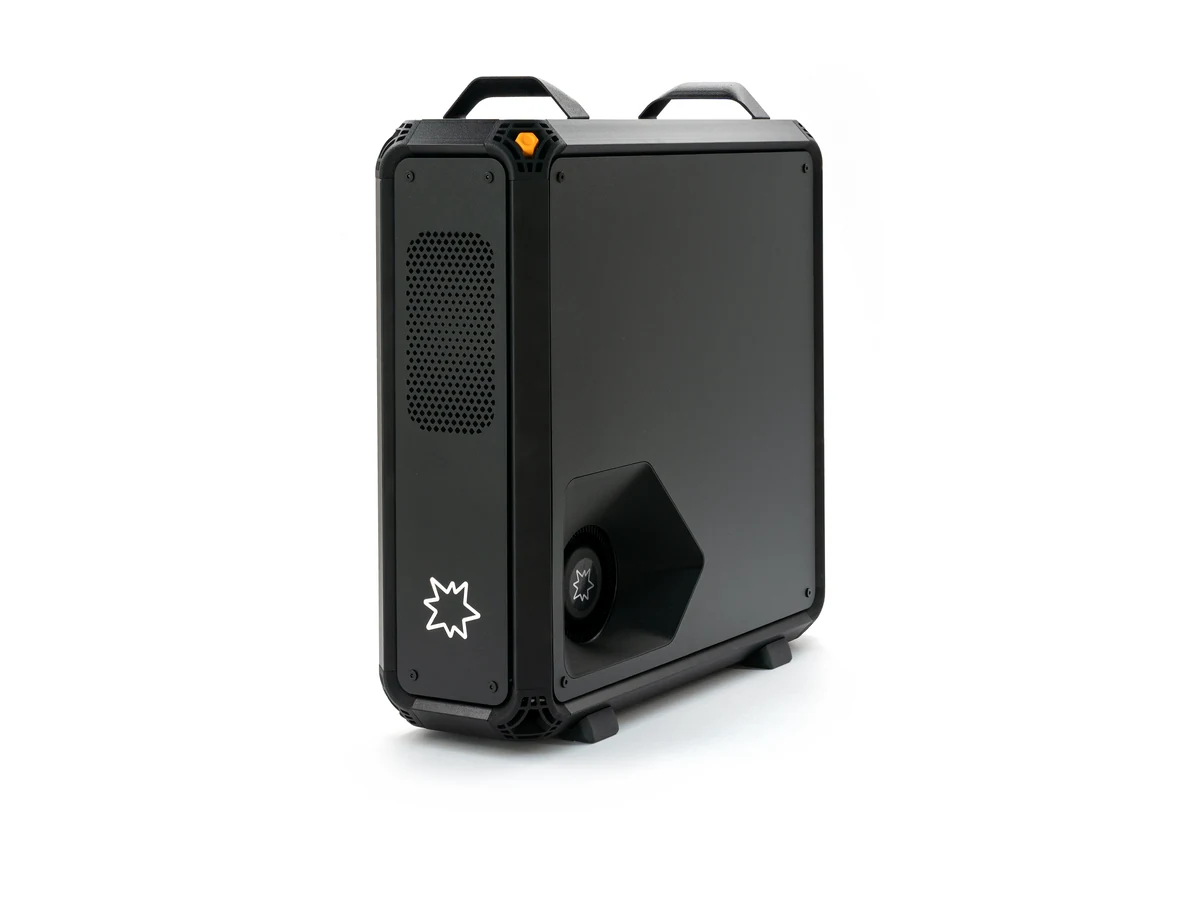
Lucebox Zero 495 workstation, anodized black, studio photo on white

Partners

AMD
Google Gemma
Alibaba Qwen
poolside
Ant Group
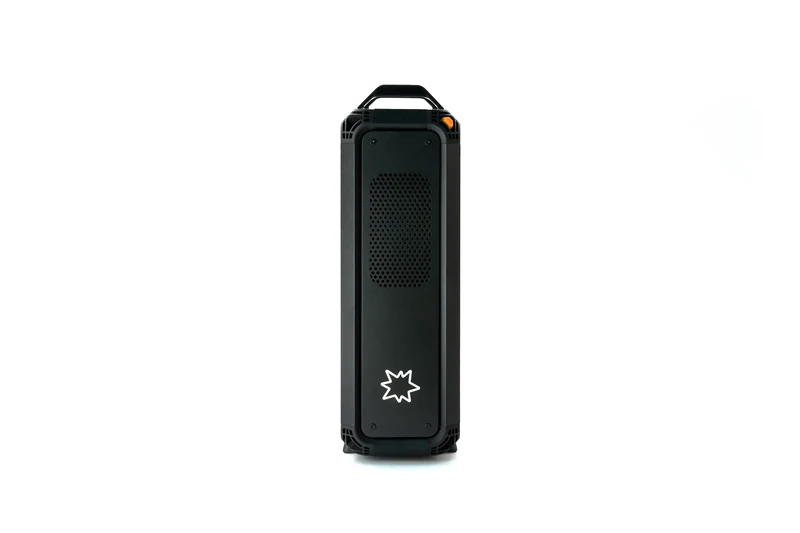
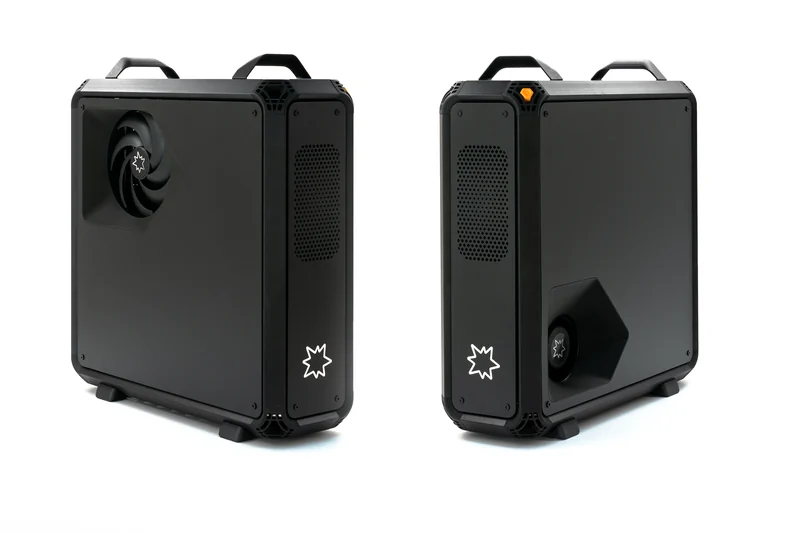
Lucebox workstation, front panel with the intake grille, head-on

Intelligence you own.

The Lucebox Zero 495 is a workstation for running large open models locally. Its GPU and up to 192 GB of unified memory work on every token together, so big models answer fast. You never pay per token.

The models come installed and tuned for this hardware, with our own kernels and speculative decoding. Set it up from lucebox.com/setup and point your coding agents at it.

See price and options

What's inside.

  • Memory
    128 GB or 192 GB LPDDR5X-8533, shared by CPU and integrated GPU
    Bandwidth
    273 GB/s
    Processor
    AMD Ryzen AI MAX+ PRO 495, 16 cores / 32 threads

    The CPU and the integrated GPU read one shared pool, so models that do not fit in the R9700's 32 GB GDDR6 still run, with long context, or as a second model kept loaded.

  • Card
    AMD Radeon AI PRO R9700
    Bandwidth
    640 GB/s
    Compute
    64 compute units, up to 191 TFLOPS at FP16

    The hot path runs here: the weights and KV cache of a 27B-class model stay on the card, where the custom kernels and speculative decoding run.

  • Capacity
    2 TB, or 4 TB as an option
    Interface
    NVMe 1.4, M.2

    It holds the system, the engine and the tuned model profiles, with room for your own weights, and fast reads mean big model files load quickly.

  • Ports
    2× USB4, 2× USB-A 3.2 Gen 2, 2× USB-A 2.0, HDMI 2.1, DisplayPort 1.4, 10 GbE Ethernet, plus 4 display outputs on the GPU
    Wireless
    Wi-Fi 7 and Bluetooth 5.4, built in
    Clustering
    Optional cluster kit per machine: Mellanox ConnectX-5 Ex, 2× 100 GbE, on a PCIe 4.0 x4 link, installed, cable included

    Most people keep it out of earshot and reach it over the network; the rear ports also drive screens when you want them.

  • Output
    1,000 W, SFX form factor
    Draw
    ~500 W under full inference load, ~40 W idle

    One unit feeds the board and the GPU with headroom to spare, and it plugs into a standard wall outlet.

  • Intake
    120 mm Arctic P12 Slim behind the side grille, blowing on the R9700
    Compute board
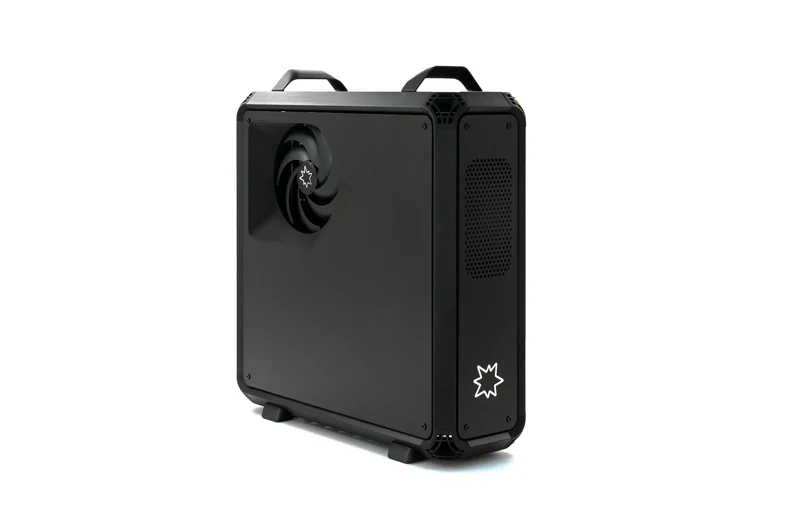
    Two 80 mm fans on its cooler, out through the rear duct
    GPU
    R9700 blower, out of the card's bracket

    The side fan feeds the R9700 fresh air, and the board and the GPU each push their own heat out the back, so speed holds through long runs.

  • Dimensions
    340 × 110 × 320 mm (13.4 × 4.3 × 12.6 in)
    Weight
    6 kg (13.2 lb)
    Finish
    Anodized black

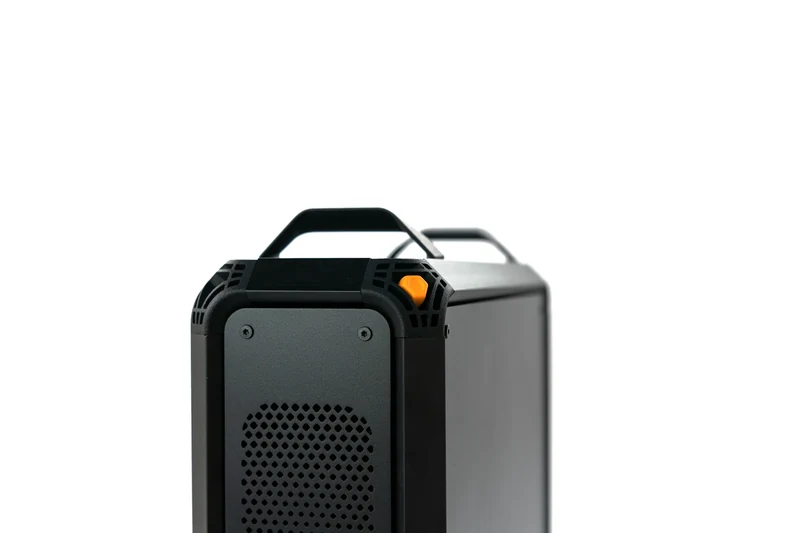
    A rigid aluminium frame with carry handles holds a full-length workstation GPU, the compute board and the power supply in a box that fits a shelf.

  • Covers
    Parts and labor, after 72 hours of burn-in
Check full specs

What developers say.

0xSero@0xSero

Best deal without a doubt right now grab it before it’s too late. With this you’ll be able to run GLM-Flash/DS4.1-Flash really fast ❤️

Ahmad@TheAhmadOsman

I like your stuff so far, keep going

Carlo@Italianclownz

This is probably one of the best prices to get into powerful local AI right now. The Lucebox team is dedicated to support and giving you a way to run quality AI in-house for your needs. Besides being affordable for the compute power you get there is a big community involvement

Lotto@LottoLabs

This is very compelling Especially with strata type offloading I’ve been working with midrange bandwidth cards like the P150 and you can get really decent performance I expect small to mid size moes to rip on this thing

Loktar@loktar00

I'm tapped out too many 3090s and Christmas is coming but this is a HECK OF A DEAL.

Digital Spaceport@gospaceport

Given the "new" Spark size/price news, this looks like a very serious competitor. Especially with it's R9700 Pro included.

vitalik.eth@VitalikButerin

github.com/Luce-Org/lucebox-hub looks promising as a way to run "dense" models (eg. Qwen 27B) more efficiently. It's janky, but on my 5090 laptop it seems to be ~2x more tok/s than llama.cpp

Jaro@jaro3th

Best deal on any kind of hardware rn Honestly surprised that they priced it this low Congrats @pupposandro on the launch @luceboxai is the way

Marco Franzon@mfranz_on

Local AI lovers this one is for you. One of the best AMD setups for hosting your own AI models

Sudo su@sudoingX

this guy just cracked 134 tok/s on qwen 3.5-27b dense and 73 on new qwen 3.6-27b on a single 3090. open source moves at godspeed in 2026.

Donato Capitella@dcapitella

The Lucebox guys have been cooking!

Our open source inference engine is used by engineers at

NVIDIA
AMD
Google
Microsoft
Apple
Meta
Amazon
TSMC
Intel
SpaceX
IBM
Alibaba
Tencent
ByteDance
Huawei
Oracle
Adobe
Netflix
Uber
Cloudflare
Hugging Face
Luma AI
poolside
Modal
Supabase
60+Contributors
790+Pull requests
140K+Model downloads
Join the community

Built for speed.

DeepSeek V4 FlashMixture of experts

Decode, tokens per second

  • Lucebox 54
  • Mac M5 Max 39.35
  • DGX Spark 35.3

DeepSeek V4.1 Flash, 32K prompt

  • Lucebox ~33
  • Ryzen AI MAX+ alone ~16

DGX Spark and Mac M5 Max: public runs. Ryzen AI MAX+ alone: Framework's run.

1.5× DGX Spark decode speed.

Two processors work on every token. The R9700 runs the part every token needs from its own 640 GB/s memory, and 192 GB of unified memory holds the rest of the model.

On DeepSeek V4 Flash it writes faster than DGX Spark and a Mac M5 Max. On V4.1 it writes twice as fast as the same Ryzen AI MAX+ on its own.

Decode is how fast the answer comes out once the model has read the prompt. DGX Spark and Mac M5 Max are public results, each with its own setup, quantization and prompt. The Ryzen AI MAX+ alone is Framework's published run on the same chip, with its own engine.

One model across both chips.

DeepSeek V4 Flash has 256 experts in each layer and uses 4 of them for each token. The R9700 keeps the most-used experts beside the layers every token needs, and unified memory holds the rest.

Both chips read their part at the same time, and only small results move between them. The cache stays on the GPU.

Two models at once.

Lucebox Mix runs one model on each chip behind one endpoint: Qwen3.8-27B on the R9700, DeepSeek V4 Flash in unified memory. Your apps pick a model by its id, and the engine sends the request to that model's chip.


Each model has its own memory and its own compute. In our test, with 8 users on Qwen and 4 on DeepSeek, Qwen kept 88% of its solo speed and DeepSeek 99%.

Use cases.

CI/CD and code review

Builds, tests and AI code review on one box in the office, instead of runners and an API billed by the minute.

$1,559 a month
36 months
Pays for itself in
about 5 months
In the budget
$256 a month
Over the write-off
saves about $46,900
Then saves
$1,530 a month

Coding agents

Give agents the long jobs, like a refactor or a test suite, and run several at once with no rate limit.

connect  claude code → lucebox.localmodel    qwen3.8-27b> write tests for the upload retry logic

Private knowledge base

Ask across your wiki, specs, tickets and code, and get answers that cite the file. Nothing leaves the box.

> where do we set the upload retry limit?  maxRetries = 5, services/upload/config.ts  source: docs/runbooks/uploads.md

Always-on agents

Agents triage issues and watch alerts through the night, then leave a summary for the morning. The night costs only power.

07:00  overnight summary       9 issues triaged, 2 marked urgent       disk on db-2 at 91%, ticket opened
See the system

Easy setup, with apps you already use.

lucebox.com/setup Lucebox Manage Open setup
Loading the real setup UI…
Setup
Manage

Start at lucebox.com/setup. Pair the machine nearby and put it on your network from the setup page.

Works with the tools you already use
Claude Code
Codex
OpenCode
Hermes
OpenClaw
Pi
Oh My Pi
Open WebUI
See the platform

Order your Lucebox.

Developer

For individuals

Engine open source, free forever

Starting at $5,999 USD per machine / taxes, duties and shipping included Taxes and shipping included

  • Lucebox Engine, open source, with tuned models preinstalled
  • 1-year warranty on parts and labor
  • Worldwide shipping included
  • All taxes and duties included
Order now

Card or Shop Pay Full refund within 30 days Terms

Business

For teams and companies: any number of machines, installed on your network, your models tuned for them, and direct support from our engineers.

We share what we learn.

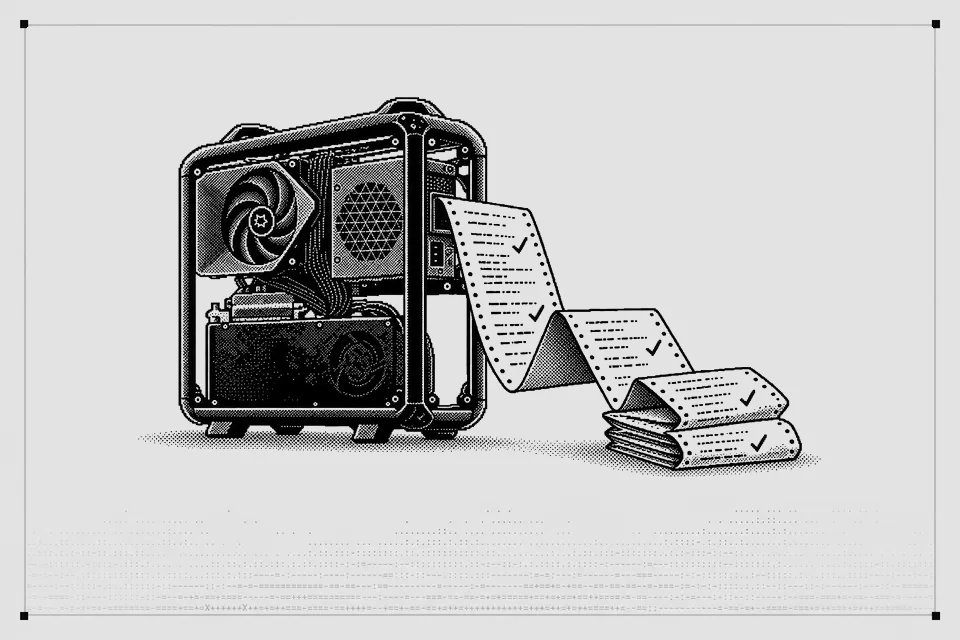
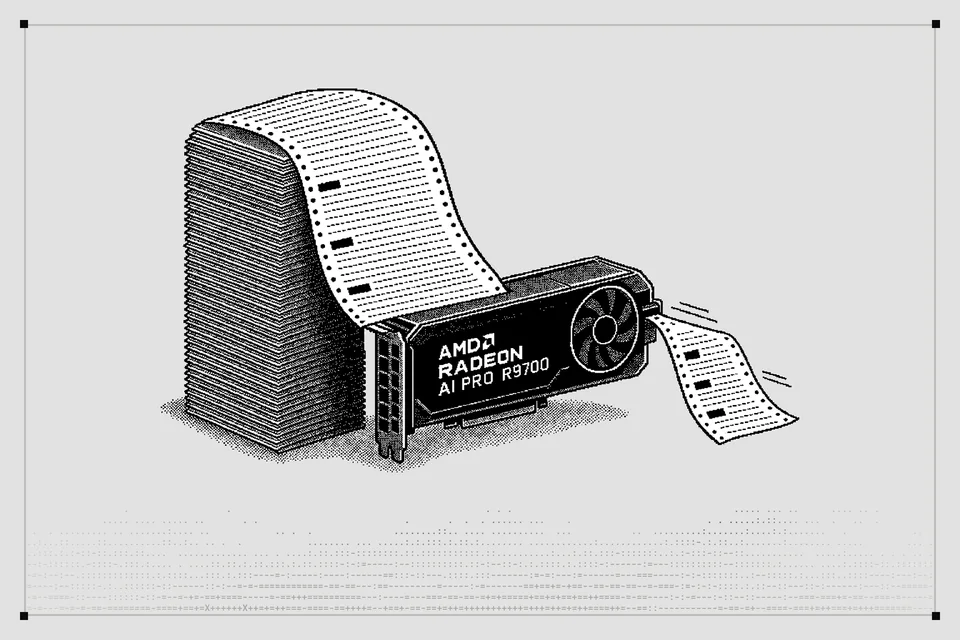
A Lucebox with a long strip of printer paper running out of it, rows of code with a check mark every few rows

CI builds and AI code review on one Lucebox: paid back in about 5 months

Our CI bots cost us about $1,340 a month on hosted models. One Lucebox reviews every pull request on our main repository and runs Linux jobs for $8,199 once and about $1 a day, and pays for itself in about 5 months.

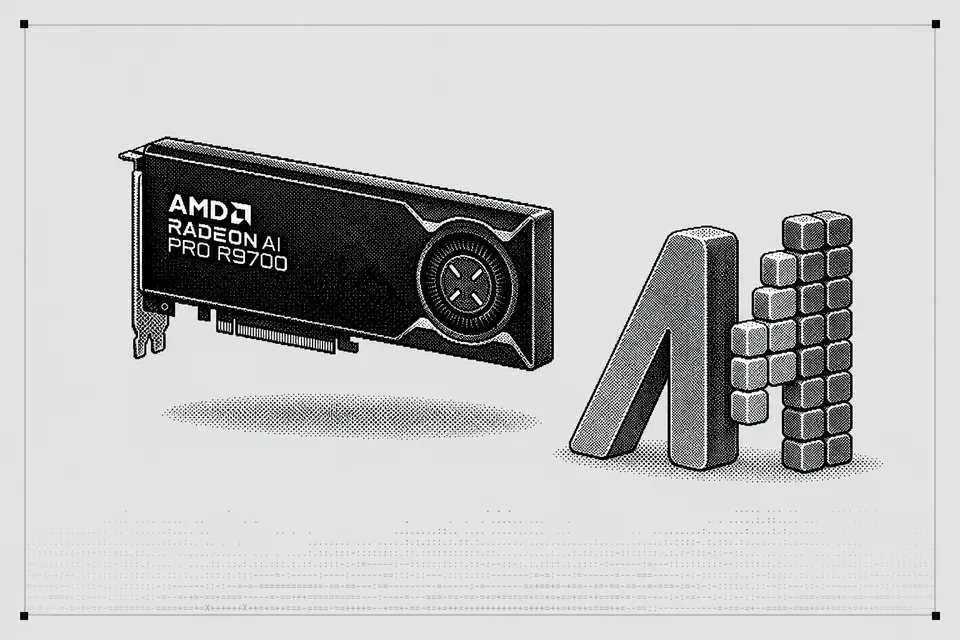
A Radeon AI PRO R9700 graphics card floating above its shadow, beside a large block model of the MOSS-Image logo

MOSS-Image on the R9700: a 1024x1024 image in 2.7 s at 8 steps, 1.8x faster than ComfyUI on a DGX Spark

Our engine now runs MOSS-Image, a 5B text-to-image model, natively on the Radeon AI PRO R9700. A 1024x1024 image takes 2.7 s at 8 steps, 1.8x faster than ComfyUI on a DGX Spark at the same settings. The engine is open source.

PFlash v2: a long document with a few whole units highlighted in gold, flowing into a short compressed prompt

PFlash v2: 3x faster processing on long prompts

PFlash decides which parts of a long prompt the model reads: 92 of 124 public long-context questions against 94 for full prefill, with the model reading a median 27% of the prompt and the first token 3.7x sooner on average on one AMD Radeon AI PRO R9700.

Read all articles

Frequently asked questions

We're here to make powerful AI something you own, not something you rent. Our mission is to commoditize access to fast, powerful local models, through hardware and software co-design.

Lucebox Zero 495, three-quarter view, studio photo